New Detail
Sep. 05, 2025
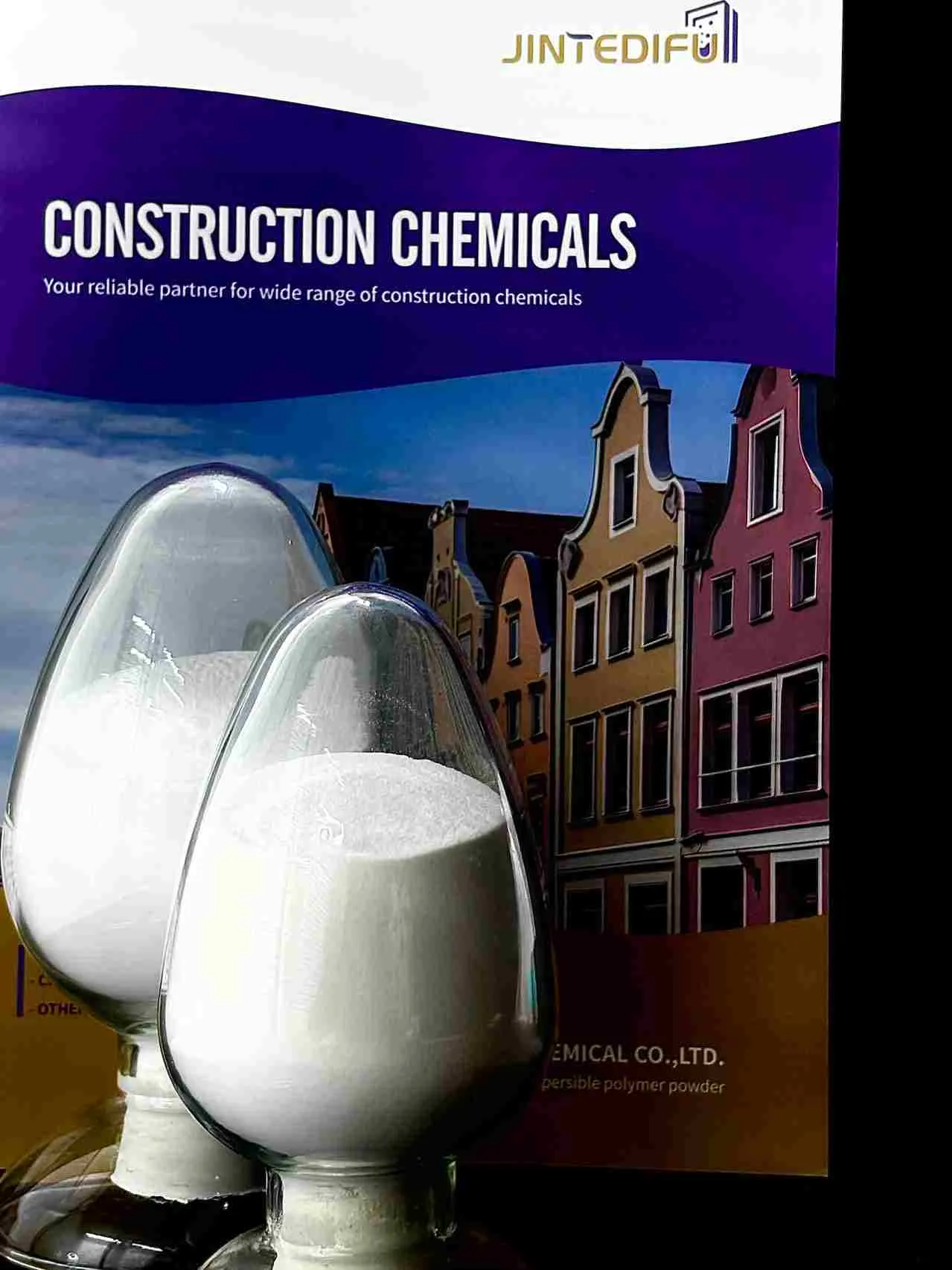
Redispersible polymer powder (RDP) is widely used in dry-mix mortar to modify key performance
properties. Its value depends on the mortar application and the performance requirements of the finished formulation.
For formulators and raw material buyers, RDP should therefore be evaluated not simply as a
general-purpose additive, but according to the specific performance required by the mortar.
Bonding strength is an important requirement for many polymer-modified dry-mix mortars,
including wall putty and tile adhesive.
RDP can be selected when improved bonding performance is required. The actual result
depends on the complete formulation, substrate, curing conditions, and RDP grade.
Flexibility is another important consideration when developing dry-mix mortar formulations.
RDP grades with bonding strength and flexibility functions can be evaluated when
the formulation requires a balance between adhesion and flexibility.
This is particularly relevant when the finished mortar needs to accommodate the
performance requirements of the intended application.
Waterproofing should not be treated as a universal function of every RDP grade.
For applications where bonding strength, flexibility, and waterproofing are required,
JINT™-745 is a product to evaluate. Its product page specifically lists all three functions
and includes wall putty, tile adhesive, and joint filler among its applications.
Different dry-mix mortar applications can have different performance priorities. A practical selection process is:
Application requirement → Performance requirement → RDP grade → Formulation testing
For example:
1) General formulation requirements → bonding strength + flexibility
2) Higher bonding strength requirement → evaluate a high-bonding-strength grade
3) Bonding + flexibility + waterproofing requirement → evaluate a grade with all three listed functions
This approach avoids selecting an RDP based only on general claims or price.
Before approving an RDP for production, test it in the actual mortar formulation.
A simple comparison should keep the following conditions consistent:
-Base formulation
-RDP dosage
-Water level
-Mixing procedure
-Curing conditions
-Test methods
Depending on the application, compare bonding strength, flexibility, waterproofing where required, and practical workability.
The final RDP selection should be based on the performance of the complete mortar rather than the RDP alone.
JINTEDIFU offers several RDP grades for dry-mix mortar applications.
For a general formulation requiring bonding strength and flexibility, JINT™-503 is
a universal-grade RDP that can be evaluated.
When high bonding strength is a key requirement, JINT™-502 can be considered.
Its product page describes it as a high-bonding-strength RDP and lists bonding strength and flexibility as its functions.
For formulations requiring bonding strength, flexibility, and waterproofing,
JINT™-745 is the more directly relevant grade to evaluate based on its listed functions.
The appropriate grade should be confirmed through formulation testing under the intended application conditions.
The advantages of redispersible polymer powder are best understood in relation to the finished mortar.
Instead of selecting an RDP only by general performance claims, define the application,
identify the required properties, test suitable grades, and then select the product that
provides the required performance in the complete formulation.
JINTEDIFU supplies redispersible polymer powder for dry-mix mortar applications.
Contact us to discuss your application, product selection, and formulation testing requirements.

Name: Molly.Wang
E-Mail:molly.wang@jtdf-rdp.
Mobile:+86 156 5045 0156(Whatsapp)
Latest News