New Detail
Jul. 24, 2026
In the world of construction, innovation is key.
One such innovation is the use of Redispersible Polymer Powder (RDP) in mortar.
This polymer additive for mortar is transforming how we build.
RDP enhances bonding strength, making structures more robust.
It also boosts water resistance, protecting buildings from moisture damage.
These benefits make RDP a valuable tool in construction.
Understanding RDP's role can help professionals make informed choices.
It offers advantages that go beyond traditional mortar additives.
Let's explore how RDP is changing the landscape of construction.
Redispersible Polymer Powder (RDP) is a transformative component in the construction sector.
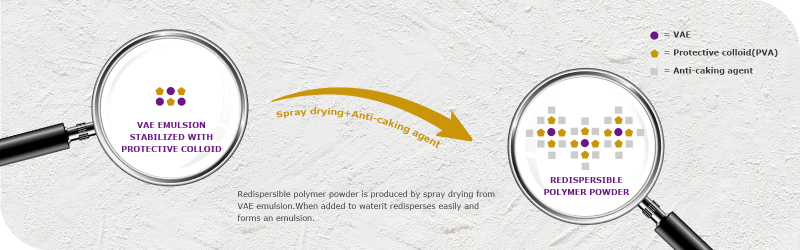
It is essentially a water-soluble polymer made into a powder form.
When mixed with water, RDP reverts to a liquid polymer, ready to enhance mortar mixtures.
RDP enhances various properties of mortar, transforming its performance in numerous ways.
It's known for improving bonding, increasing flexibility, and providing superior water resistance.
These enhancements are due to the polymer's ability to redistribute upon contact with water.
Key features of RDP include:
- Increased bonding strength
- Improved water resistance
- Enhanced workability
Construction professionals value RDP for its versatility and effectiveness.
It's used in a range of settings, from residential builds to large-scale commercial projects.
RDP works by integrating into the mortar matrix.
When mixed, it dissolves, forming a film that envelops the particles.
This film enhances properties crucial for mortar performance.
The presence of RDP influences the mortar's hydration process.
It reduces water loss, allowing for improved bonding and setting.
This control in hydration is key in achieving a strong, durable mortar.
Some benefits of the scientific interactions include:
- Enhanced tensile strength
- Reduced shrinkage
- Improved freeze-thaw resistance
This polymer technology results in mortar that is more resilient and adaptable to construction needs.
RDP ensures that mortar performs well under various environmental conditions.
RDP revolutionizes traditional mortar applications, offering a suite of advantages.
Among the most prominent benefits is increased bonding strength.
This ensures better adhesion to various substrates like concrete and brick.
Water resistance is another critical attribute enhanced by RDP.
By improving the mortar's ability to repel moisture, it helps protect structures from potential water damage.
This feature reduces the reliance on additional waterproofing measures.
Furthermore, RDP-modified mortars offer increased flexibility.
This flexibility minimizes the risk of cracking under stress or during temperature changes.
Such durability is especially beneficial in environments with fluctuating climates.
The use of RDP also enhances workability.
This means easier mixing and application on-site, improving efficiency for professionals.
Contractors appreciate the labor-saving potential of a more manageable mortar.
Additional benefits include:
- Improved freeze-thaw resistance
- Sustainability through reduced maintenance needs
- A smoother finish for aesthetic appeal
RDP's contribution to the longevity and performance of mortar makes it indispensable in modern construction.
By enhancing mortar with these qualities, RDP serves as a vital component in contemporary building practices.
The adhesive strength of mortar dramatically improves with RDP.
This is crucial for applications requiring robust durability.
As a polymer additive for mortar, RDP increases the cohesion between particles.
RDP achieves this by forming a flexible film within the mortar.
This film enhances bonding at a microstructural level. It ensures tighter integration with various building surfaces.
This improved adhesion is essential across many construction scenarios, including:
- Tiling projects
- External insulation systems
- Repairing existing structures
Overall, using RDP in construction ensures long-lasting and secure applications.
This reinforces the reliability of mortar under various conditions.
The introduction of RDP has thus revolutionized how professionals approach bonding challenges in construction tasks.
RDP significantly enhances the water resistance of mortar.
This capability is vital for ensuring that structures remain dry and intact.
By incorporating RDP, mortar becomes more effective in repelling moisture.
The polymer creates a barrier that limits water penetration.
This action safeguards the structural integrity of buildings.
RDP-treated mortars are thus highly resistant to water-induced damage.
Structures that benefit from RDP-modified mortar include:
- Foundations
- Facades
- Pools and water features
In addition to water resistance, RDP boosts the durability of mortar, extending the lifespan of construction projects.
By reducing maintenance needs, RDP offers long-term economic and structural benefits.
These attributes make RDP an essential component in modern construction practices.
RDP adds crucial flexibility to mortar, preventing cracks due to movement or stress.
This flexibility is especially beneficial in regions with seismic activity or temperature fluctuations.
Structures maintain their integrity under various conditions.
Improved workability is another benefit of RDP.
Mortar becomes easier to mix and apply, which helps both professionals and DIY enthusiasts.
This ease of use leads to faster project completion.
Cost savings are realized with RDP-modified mortar because of reduced maintenance needs.
Enhanced performance and longevity mean fewer repairs, making RDP a smart investment.
The overall cost-effectiveness contributes to more sustainable construction practices.
RDP-modified mortar is versatile and finds use in various applications across construction.
It is a popular choice for both new builds and renovation projects.
These mortars are commonly applied in:
- Tile adhesives
- Repair mortars
- Exterior insulation systems
These diverse uses underscore the adaptability and effectiveness of RDP as a polymer additive for mortar, making it invaluable in construction.
Its ability to enhance performance in such varied applications highlights its integral role in modern building technology.
Selecting the right RDP for your project requires careful consideration of specific needs and environmental conditions.
Understanding the product's technical specifications and compatibility with existing materials is crucial.
For optimal use, professionals should:
- Assess application conditions
- Consult manufacturer guidelines
- Conduct compatibility tests
These practices ensure that RDP is effectively integrated, maximizing the benefits of this polymer additive for mortar in every construction task.
The evolution of mortar additives like RDP is transforming construction practices worldwide.
As technology advances, polymer additives will drive innovation and sustainability.
The growing demand for durable and adaptable building materials ensures RDP will remain pivotal.
Future developments promise even greater efficiencies in building processes.
Name: Arlo.Hu
E-Mail:arlo.hu@jtdf-rdp.com
Mobile:+86 185 6012 8196(Whatsapp)
What Is RDP in Mortar? A Simple Breakdown of Polymer Powders and Their Job
Essential Functions of Redispersible Polymer Powder Additions in Plaster and Render Systems
Latest News


